
Arrest Warrants in Sabine Parish
A warrant to arrest is a court order that puts a person in custody and brings them before a judge. It does not issue on suspicion. Louisiana requires a sworn affidavit or complaint plus a magistrate's probable-cause determination, and that finding is the gate. Without it, there is no warrant. In Sabine Parish, the issuing court is usually the 11th Judicial District Court, which holds original criminal jurisdiction over these cases. City police investigations can also lead to warrants through a mayor's court for ordinance matters. A Justice of the Peace can issue in a district case.
Probable Cause Behind Sabine Parish Arrest Warrants
In Sabine Parish, an arrest warrant starts with paperwork, not a phone call. An officer swears out an affidavit or complaint. C.Cr.P. art. 202 puts that sworn statement in front of a magistrate, who then weighs whether probable cause exists. No warrant issues on an officer's word alone. That layer of review is what separates a real arrest warrant from a rumor. It also lets a case move quickly and quietly, since an order can be signed, entered, and served before anyone outside the courthouse hears of it. There is no parishwide public list of new warrants; the probable-cause article simply sets the standard a magistrate applies.
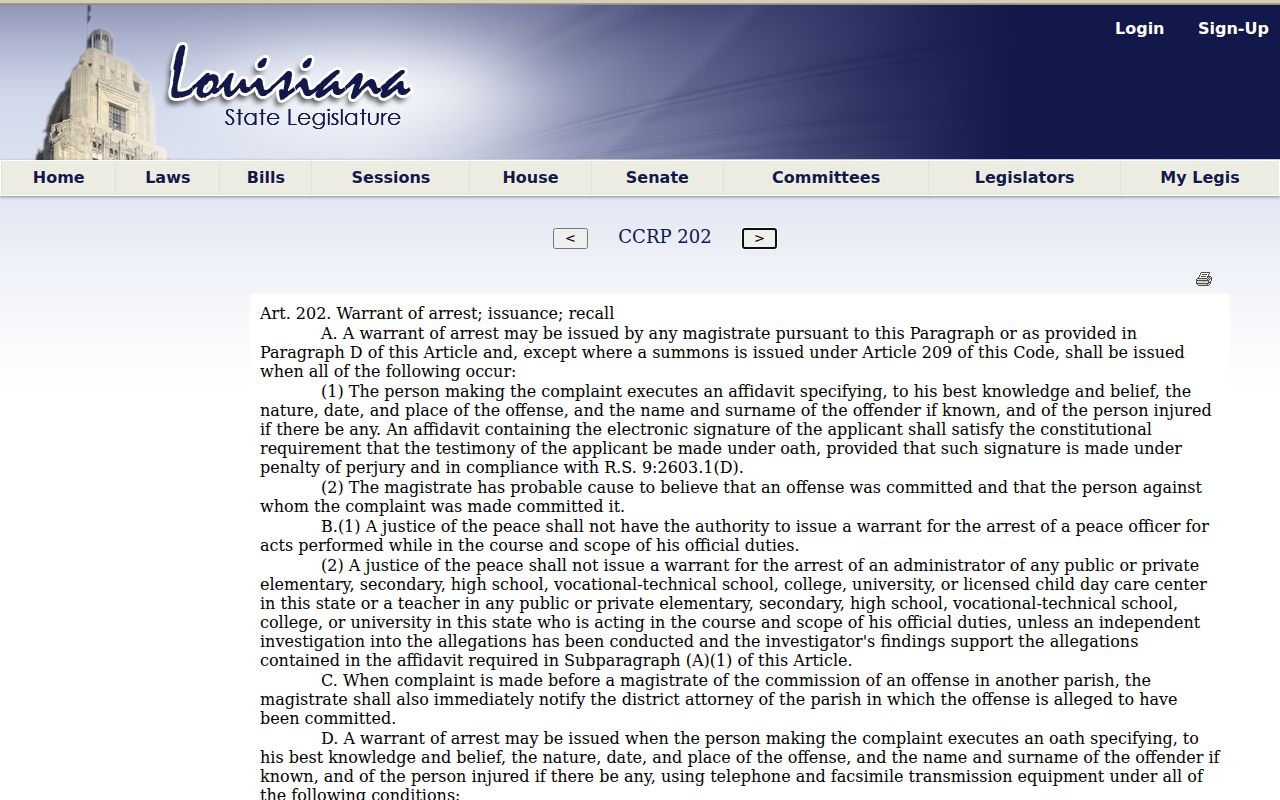
This is the first thing a defense attorney reads in a Sabine Parish arrest warrant case. Read it to see why the judge signed the order.
What a Sabine Parish Arrest Warrant Contains
Louisiana law fixes what a valid Sabine Parish warrant must contain. The pieces listed below all belong on the paper. If something is missing, that is a question for a lawyer, not a reason to act alone.
| Identifying context | The state, the parish, and the date the warrant was issued. |
|---|---|
| The person named | The subject's name, or a description when the name is unknown. |
| The offense | The charge the probable-cause finding supports, stated on the face of the warrant. |
| The command | An order to arrest the person and bring them before the issuing court. |
| Signature | The magistrate's signature, which is what makes the paper an order rather than a request. |
| Bail direction | An optional instruction about bail, when the issuing judge chooses to include one. |
Note: The warrant's face is short. The facts behind it live in the affidavit, and that document may stay private while an investigation is open.
When Sabine Parish Warrant Affidavits Stay Private
A warrant and the paperwork behind it travel separately in public. R.S. 44:3 lets an agency withhold confidential sources, investigative techniques, and material tied to pending criminal litigation. So a Sabine Parish request for a complaint or affidavit in an open case often returns with redactions or a written refusal. That is not a dead end. Ask for the legal basis of each withholding. Ask for the non-exempt portions with the redactions marked. Then keep the response, because a written denial with a stated reason is a document you can use later if the case posture changes. The law-enforcement records exception is the provision most likely to show up in a denial letter here. Sabine Parish agencies lean on it often.
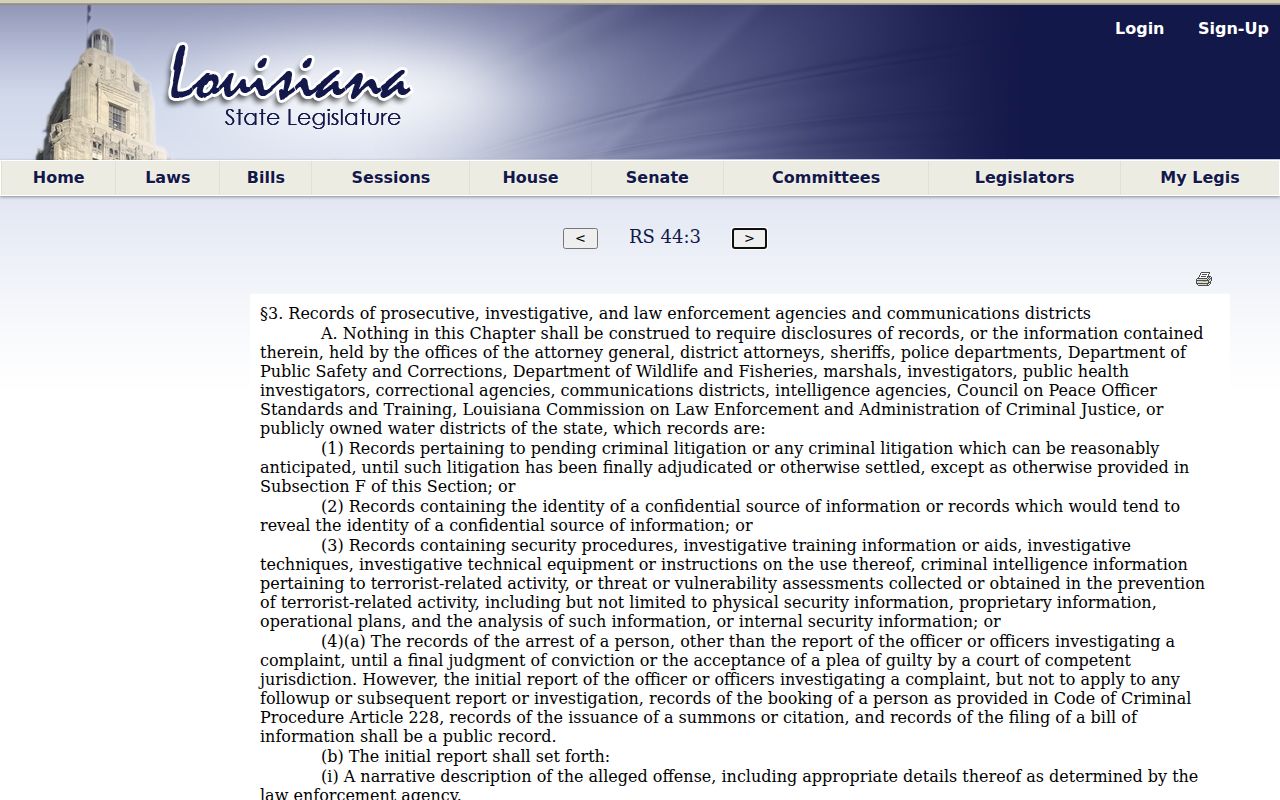
Read it before you write your Sabine Parish records request, and narrow the request to what the statute leaves open.
How Sabine Parish Arrest Warrants Are Served
The Sabine Parish Sheriff's Office serves warrants across the parish. Patrol covers roughly 865 square miles of land and 146 square miles of water, around the clock. Service can mean a rural address, a lake property, or a traffic stop on a state highway. High-risk entries go to the Sheriff's Special Operations Group. There is no public service queue. No posted calendar marks a warrant sweep. No list says which warrants a deputy will attempt next. An open warrant stays open in the meantime.
Who Answers for Sabine Parish Arrest Warrants
Three offices answer three different questions in Sabine Parish. Mix them up and you lose a day. The court decides the case, the Sheriff decides service and custody routing, and the jail decides what a person can post and when.
11th Judicial District Court
Whether a warrant is active, what the bond calls for, and what the court requires next.
318-256-9789
Sheriff's Office
Dispatch and law-enforcement routing, plus the civil office for records requests.
318-256-9241
Detention Center
Custody status and bond routing once a person has been taken into custody.
318-256-0006
The state facility listing covers both custody sites.
You may find two facilities: the Sabine Parish Jail at 400 South Capitol Street in Many, and the detention center at 384 Detention Center Road. Confirm which one before you drive.
Arrest Warrant vs Summons vs Bench Warrant
Arrest warrants, summonses, and bench warrants lead to different outcomes. Only one authorizes custody on sight. Read the comparison before you call a Sabine Parish court about a paper you found.
| Point | Arrest warrant | Summons | Bench warrant |
|---|---|---|---|
| What it is | Order to take a person into custody | Notice to appear in court | Order after a missed obligation |
| What starts it | Sworn affidavit and probable cause | A filed charge in a misdemeanor or traffic matter | A missed date, payment, or condition |
| Custody on sight | Yes | No | Yes, once issued |
| Governing law | C.Cr.P. art. 202 | C.Cr.P. art. 211.1 in specified cases | C.Cr.P. art. 333 |
| First call | Issuing court, then an attorney | The court named on the summons | The court that set the missed date |
A summons can replace an arrest. Louisiana allows it in some misdemeanor and traffic cases, which is why a person in Sabine Parish can face a charge with no warrant existing at all.
Search Warrants vs Sabine Parish Arrest Warrants
A search warrant is a different tool entirely. It authorizes a search of a place for evidence, and it names nobody as wanted. Its execution rules say nothing about arrest. Keep the two topics separate. A records request about a search in Sabine Parish runs into the same law-enforcement exceptions described above. The material may also be sealed or tied to an open investigation. Expect a narrow answer.
Federal Warrants and Sabine Parish Cases
Sabine Parish sits in the Shreveport Division of the Western District of Louisiana, so its federal cases are heard at the courthouse in Shreveport rather than in Many. A federal arrest warrant lives on that docket alone. You will not find it in the Clerk of Court's parish index, the Sheriff's feed, or a city docket. PACER is the official federal docket route. A public docket there may show the criminal case. A sealed or unexecuted warrant shows nothing at all. PACER charges per page, so confirm the current pricing before you pull documents.
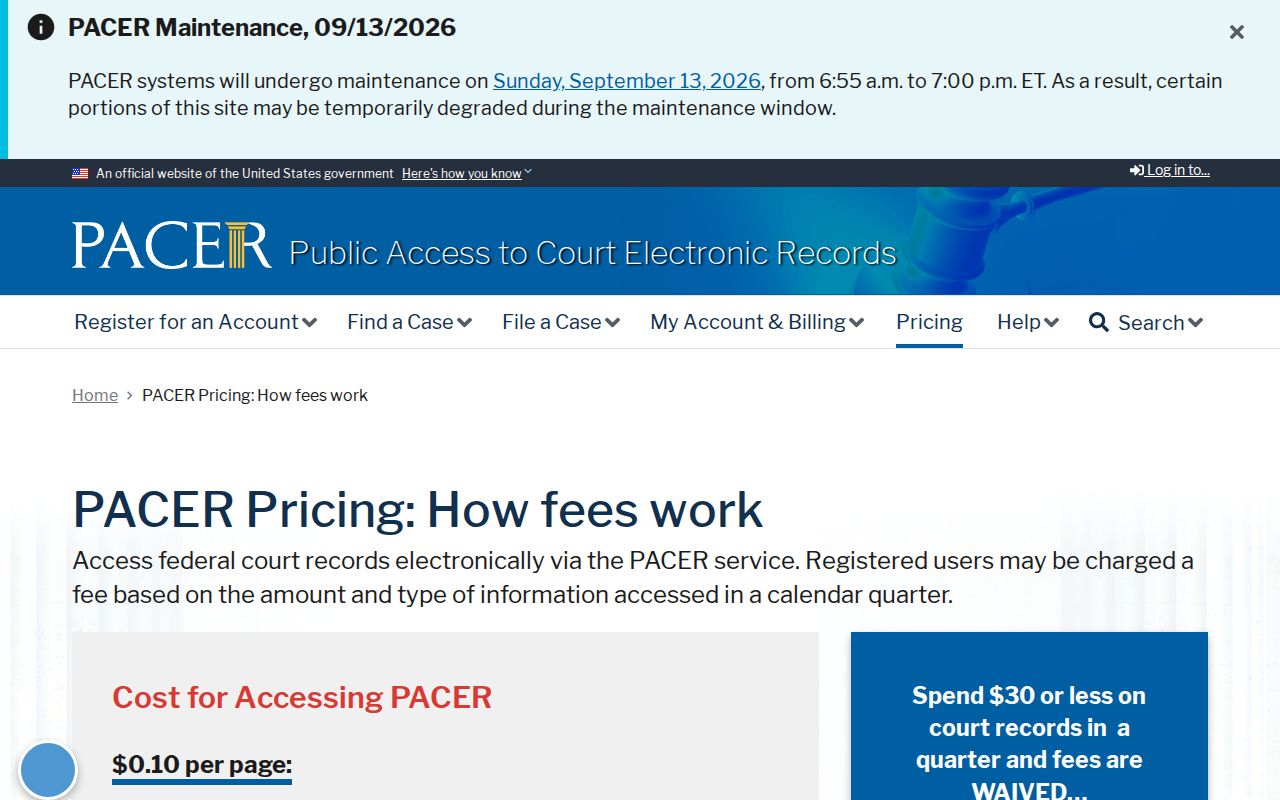
The federal pricing page spells out what each search and document costs. Budget for it in Sabine Parish whenever a case might be federal, because a parish warrant search never reaches that far.
What to Do If There Is a Warrant for You
Do not improvise. Sabine Parish publishes no surrender protocol, no bond schedule, and no walk-in warrant counter, so the safe route runs through a lawyer and the issuing court. The steps apply to district and city cases alike.
- Call the issuing court and confirm the warrant, the charge, and the bond terms.
- Write down the case number, the court, and the name of the person who gave you the information.
- Contact a Louisiana attorney before you agree to any appearance.
- Follow the court's instruction on a motion, a bond, or a voluntary appearance, and bring identification.
- Ask for written confirmation when the warrant is recalled or the case is reset.
Important: Do not evade and do not stage your own surrender. An open warrant can be served at any traffic stop, and an unplanned appearance can lock in a bond you cannot meet.
No Full Sabine Parish Arrest Warrant Search
No public tool here lists every open arrest warrant. The Sheriff's app offers a curated most-wanted feed rather than a search. The Clerk's index is built around cases and gated by a subscription. The state runs no public warrant database. City dockets stay with their cities. What works instead is a short sequence: identify the court, get the case number, call the court, and confirm in writing. The Sabine Parish warrant search page walks through each channel in order.
Note: A clean result from any single source, including the Sheriff's feed, is not proof that no warrant exists in another court.